
Assessing the user experience of e-books
Background
E-books have emerged as a new format of scholarly resources in academic libraries. Understanding how users search for and retrieve information from e-books is critical for libraries to assess the impact of e-books and develop a user-centered strategy to improving e-book collections.
Research goals
- Explore how users search for e-books in the library’s discovery tool.
- Understand how users use e-books.
- Understand how users find information in e-books.
Search log analysis
The log analysis measured the initial query distribution among the tabs of the discovery tool interface, query length and facet (filter) selection, as well as the number of queries and actions in search sessions.
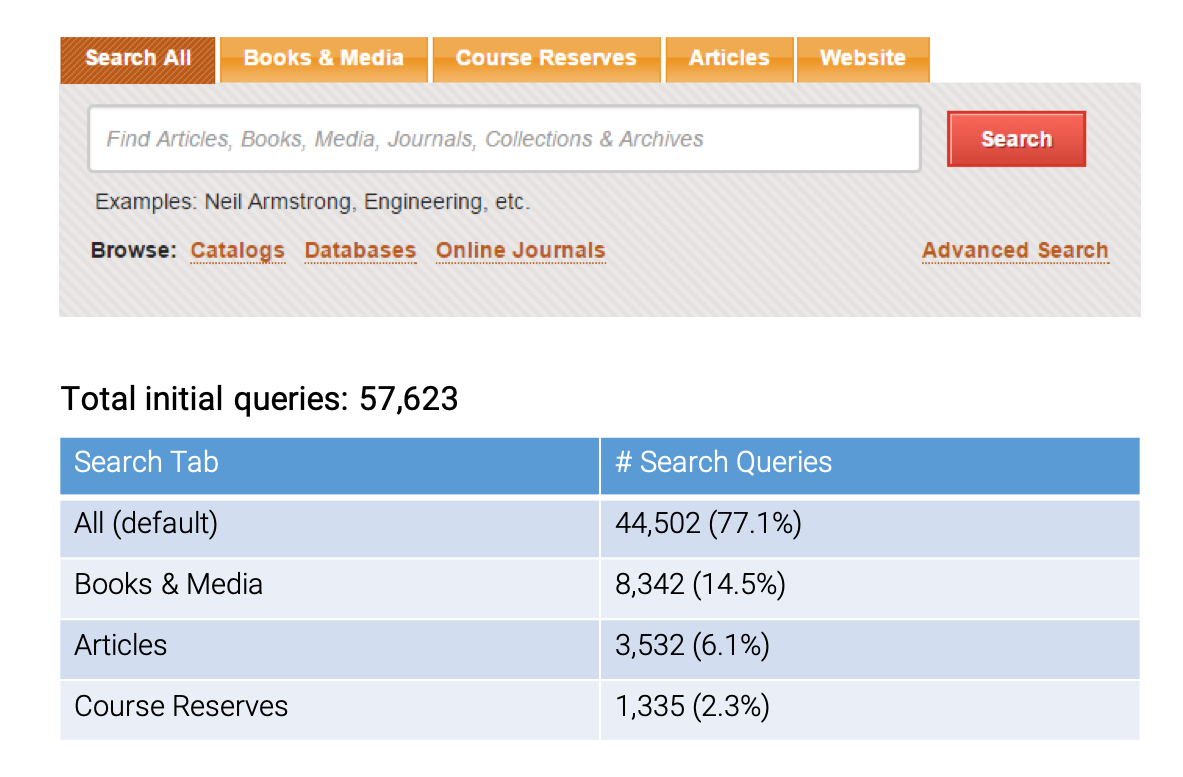
Initial query distribution
Most searches started from the default “Search All” tab.
Query length
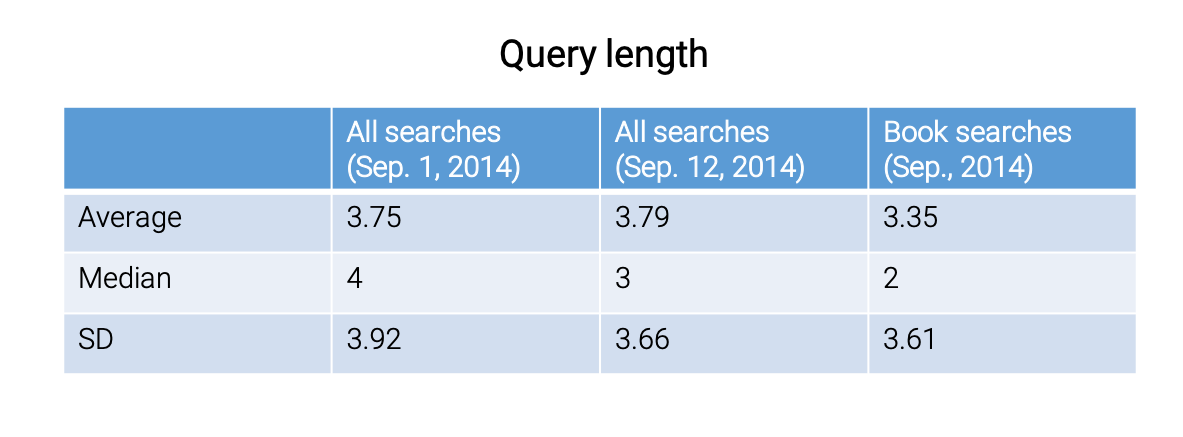
Book search queries were slightly shorter compared to the queries submitted in the “Search All” tab.
Facet usage
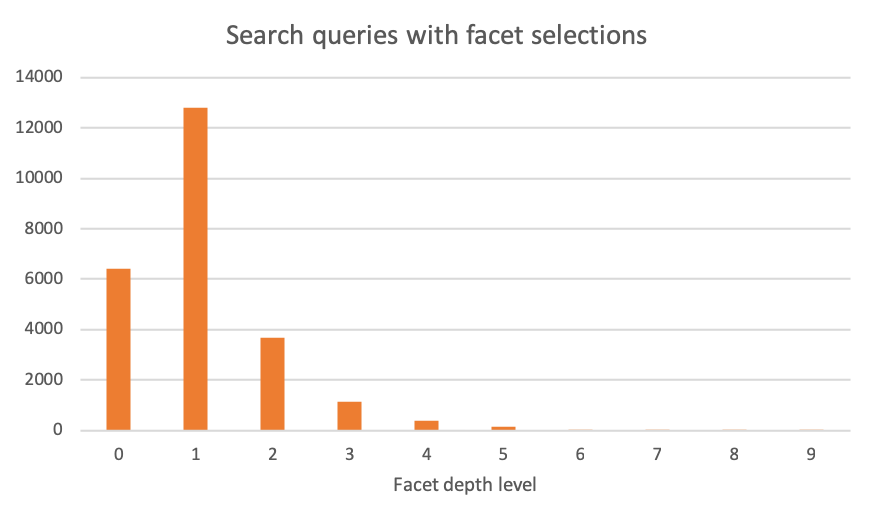
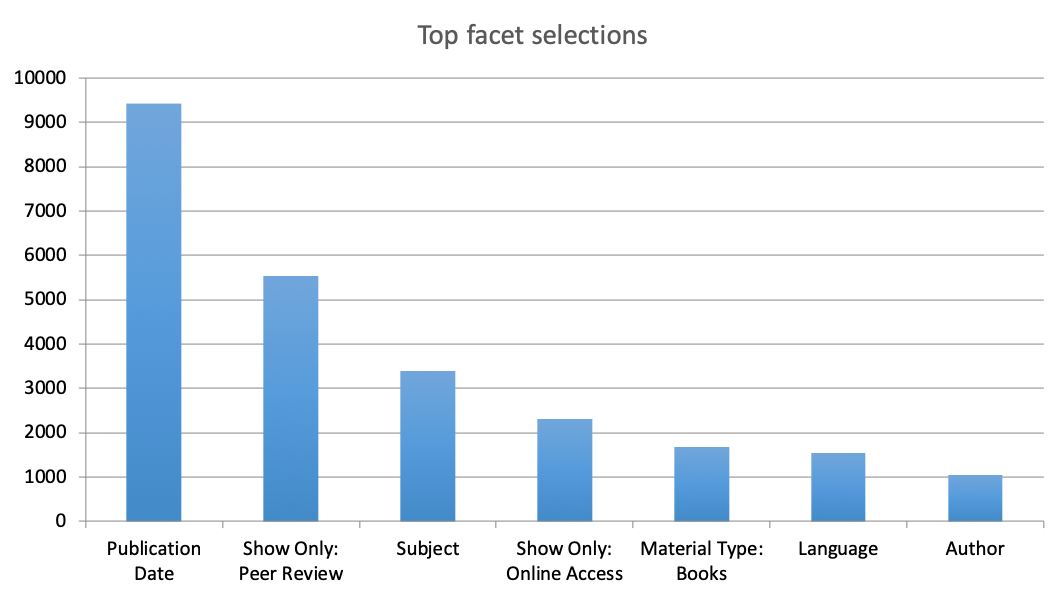
Searches with just one facet applied were the most common search sessions. Publication Date, Peer Review, and Subject were the top 3 facets in all search sessions.
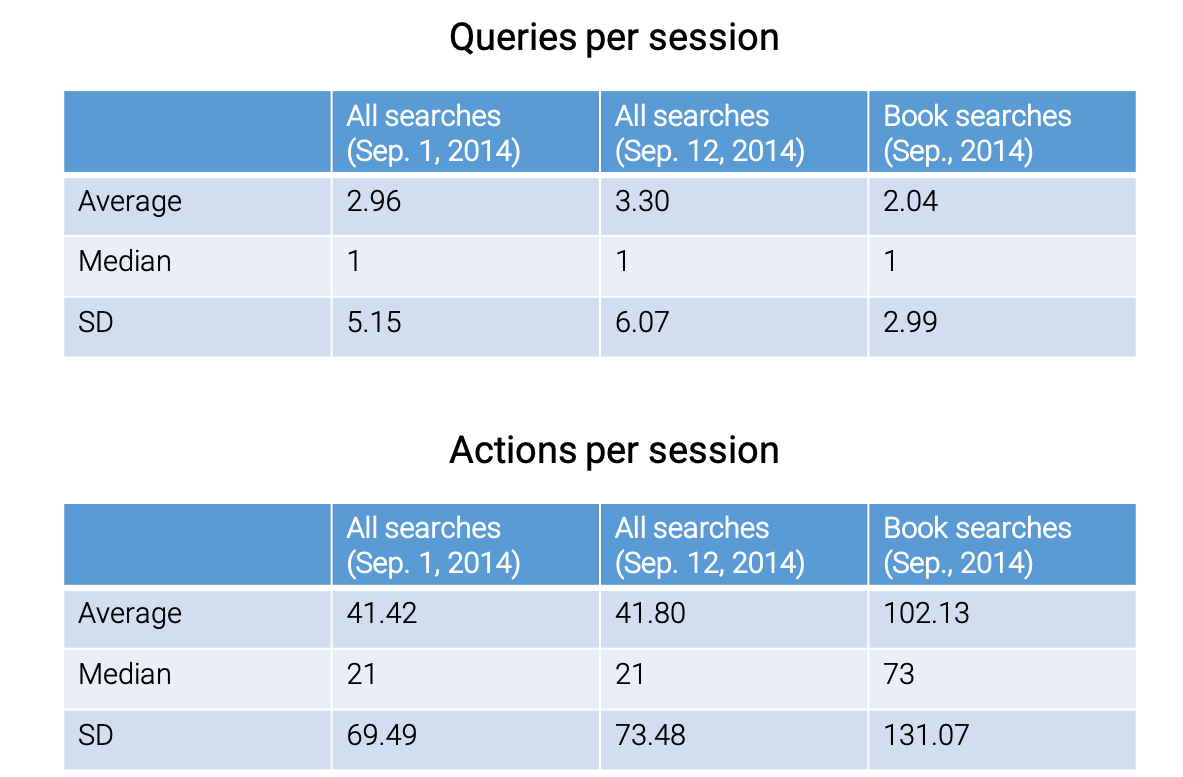
Queries and actions in search sessions
Book searches tended to be shorter but with more actions than searches submitted in the “Search All” tab.
E-book usage log analysis
We collected EBL e-book usage logs from January to November 2014. The logs contained 29, 495 individual reading sessions. Data fields of the logs were: date & time, User ID, e-book title & ID, publisher, subject category, and page number browsed.
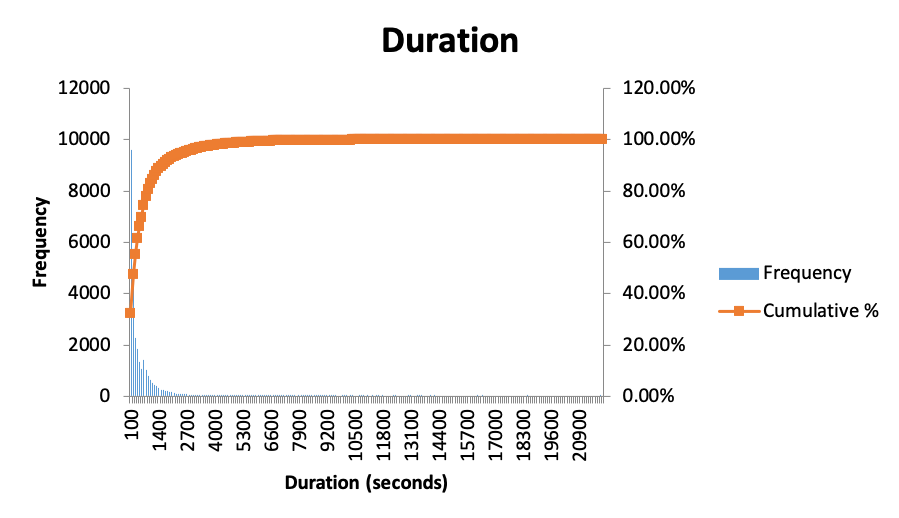
Reading session duration
69% of reading sessions lasted less than 10 minutes. 92% of sessions lasted less than 30 minutes. 2,261 sessions or 8% of sessions had download action.
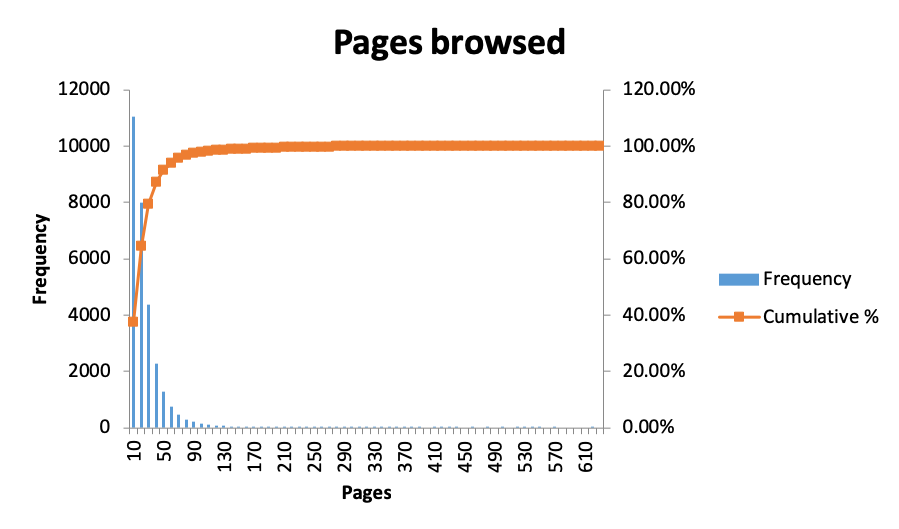
Pages browsed
80% of sessions involved no more than 30 pages browsed by users.
I created a Tableau visualization of the page numbers browsed by users across e-books and grouped by publishers and subjects.
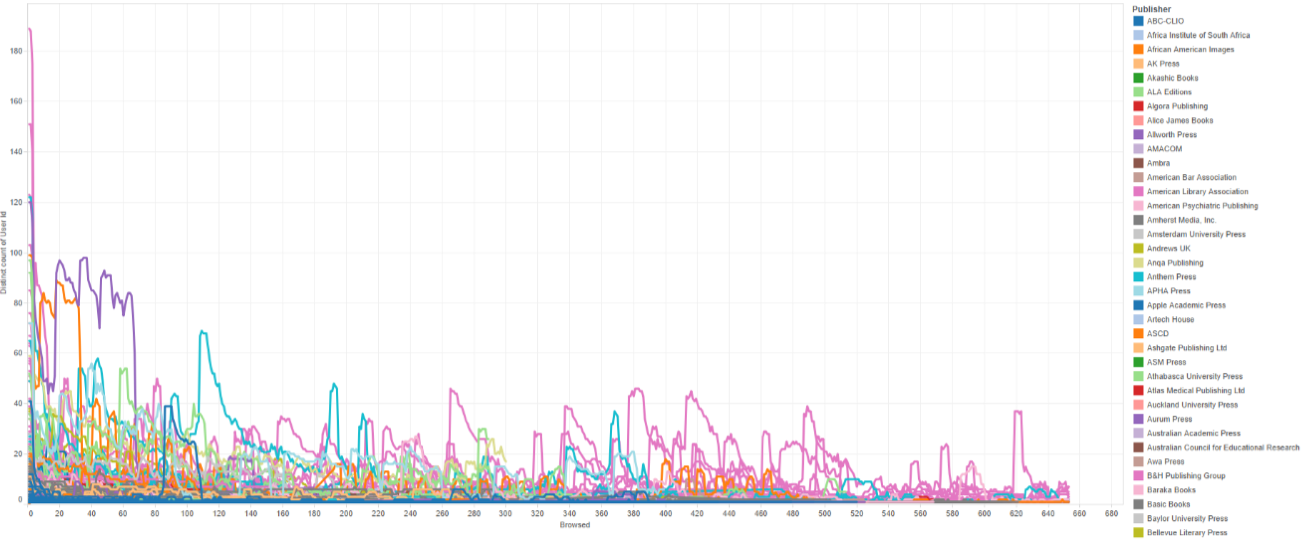
As a summary, e-books were not read from beginning to end. Most of the reading sessions were short and involved relatively small number of pages. In the library context, users mainly use e-books to find discrete information and sections (“information finding”).
User test
I conducted user tests with 12 participants (faculty, undergraduate and graduate students) of different experience levels. The test tasks included both exploratory search and information finding tasks.
The search tasks showed similar user behavior patterns as the search log analysis. Participants started from the default “Search All” tab. They did simple keyword search and browsed the first page of results. Participants’ difficulties were:
- scan large number of results.
- identify material type (e-book).
- identify format (online access).
- determine relevance from only book title, author, and publication year from the search results list.
For the information finding tasks, participants tended to interact with e-books as if they were websites. They relied on the in-book search which was actually inferior to web search engines. Participants expected to see keyword highlights and cross-references when clicking on highlighted keywords.
Overall, current e-books are designed for linear reading, not for information finding. With more e-books are being adopted in the academia, future e-books should have flexible page views (single or multiple page views), better fulltext search, more interactive navigation features, and less restrictions on copy, annotation, print, and download.
Publications
- This project won the 2015 ER&L + EBSCO Library Fellowship. Final Report.
- Zhang, T., Niu, X., & Promann, M. (2017). Assessing the user experience of e-books in academic libraries. College & Research Libraries, 78(5), 578.